Bedding • Materials & Craft
Naturepedic Organic Sheets: From French Flax to Finished Bedding
A sheet can look simple once it is spread across a bed. Its story is anything but. For Naturepedic’s organic linen bedding, that story begins with flax grown in France and continues through weaving, finishing, and the practical details that shape how a set feels and functions at home.
There is a particular pleasure in slipping into a bed made with natural linen: the fabric feels textured rather than slick, airy rather than clingy, and quietly relaxed without looking careless. But the appeal of organic linen sheets goes beyond their familiar, softly rumpled appearance. Fiber origin, fabric weight, construction, certification, and care instructions all help explain what a sheet is made to do—and whether it belongs in your everyday sleep setup.
Naturepedic’s organic linen sheets offer a useful case study. Their product details identify organic flax grown in France, a 185-gram-per-square-meter linen fabric, and GOTS certification. The sheets are made in a GOTS-certified organic facility in India, and the collection includes a flat sheet, fitted sheet, and two pillowcases. These particulars give shoppers a clearer picture than a broad label like “natural bedding” ever could. They turn a material’s origin and design into questions you can actually assess.
For anyone comparing organic bedding, the most helpful approach is to follow the fabric’s path: from plant to yarn, from yarn to cloth, and from cloth to the finished piece on the bed. Along the way, it helps to understand what certification does—and does not—tell you, why a fitted-sheet pocket matters, and how to read care instructions before laundry day arrives.
The story begins with flax
Linen is made from flax, a plant whose fibers are taken from its stalks and prepared for spinning into yarn. That origin matters to the character of the finished textile. Linen’s distinctive surface often shows small variations in the yarn, giving the cloth a tactile, natural look rather than the uniform smoothness many people associate with tightly finished cotton bedding.
In Naturepedic’s product information, the flax is described as certified organic and grown in France. That is a useful piece of sourcing information: it identifies the crop’s stated origin and connects the bedding to a specific agricultural fiber rather than leaving the raw material unexplained. It should not be mistaken for a claim that every production stage takes place in France. The product details say the linen sheets are made in India in a GOTS-certified organic facility, while the flax is grown in France. The distinction is worth noticing because a textile can travel through several places before it reaches a bedroom.
Understanding those stages is part of understanding the object itself. A fiber’s growing location, the place where it becomes fabric, and the facility where the finished bedding is made are separate details. When shoppers can find that information, they can make a more informed comparison between products and better understand what a brand is claiming about provenance and production.
Flax linen also has a feel that develops with use. Rather than relying on the impression of a perfectly sleek new fabric, linen is often appreciated for its texture and for the way it becomes softer through laundering. Naturepedic describes its sheets as stone-washed and says they soften with every wash. Stone-washing is a finishing step intended to give fabric a more relaxed hand from the start; the care label remains the best guide to how to preserve that finish at home.
What organic certification can tell you
“Organic” is a word shoppers see often on bedding, but it is most useful when paired with a clear certification and a precise explanation of what is certified. Naturepedic identifies its linen sheets as GOTS-certified organic. GOTS, or the Global Organic Textile Standard, is a textile certification framework covering organic fiber and defined environmental and social criteria across processing stages. In practical terms, it gives shoppers a more specific reference point than an unverified “eco-friendly” claim.
Certification is helpful, but it is not a substitute for reading the rest of a product description. It does not tell you whether a sheet will fit your mattress, whether the texture will suit your preferences, or whether the care routine works for your household. Nor should a certification be treated as a promise that every environmental impact has disappeared. It is one meaningful piece of a larger picture that includes material, manufacturing, durability, and how long the bedding stays in use.
For shoppers who care about sourcing, certification can make it easier to compare the claims attached to organic bedding. For shoppers focused on comfort, it can sit alongside questions about weave, weight, finish, and dimensions. The best decision usually comes from considering both: what the product is made from and what living with it will actually be like.
Reading the fabric weight
Naturepedic lists its organic linen fabric at 185 grams per square meter, often abbreviated as gsm. That figure describes fabric weight, not thread count. The two measurements are not interchangeable: thread count is commonly used in discussions of woven cotton, while gsm gives a weight-per-area measure that is useful for textiles such as linen.
Weight can help set expectations, but it cannot tell the whole story of hand or performance. Yarn quality, weave, finishing, and the way a textile is laundered all contribute to what you feel. A number on a specification sheet is therefore best treated as context, not as a universal scorecard. If you are comparing linen sheets, look at weight alongside the material description, product construction, and care directions.
Linen is often selected for its airy, textured character and its ability to manage moisture. Naturepedic describes its linen as breathable and moisture-wicking, with a natural insulating quality that can feel comfortable across seasons. Those qualities can make linen appealing to people who dislike bedding that feels heavy or clingy. But sleep comfort is personal: room temperature, mattress materials, blankets, sleepwear, and individual preference all play a role. No fabric can guarantee a particular night’s sleep.
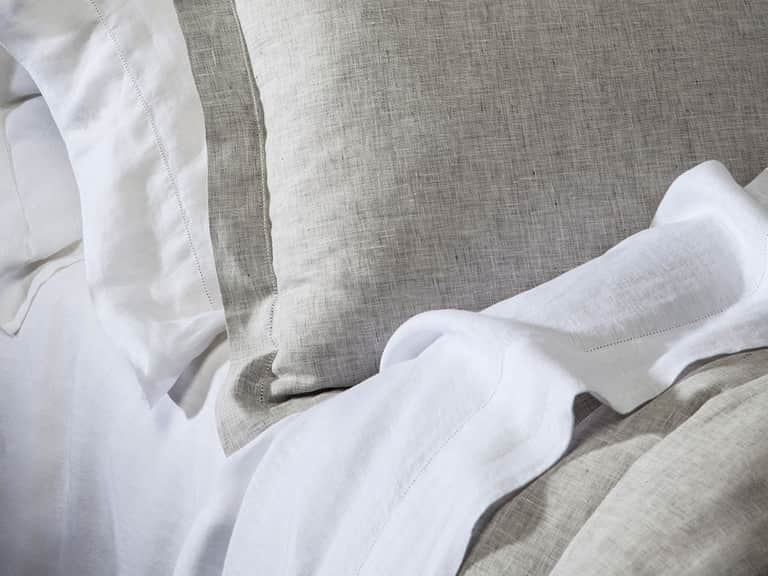
The fabric’s surface is another part of the appeal. Linen’s natural irregularities create visual depth, even in a quiet, solid color. Naturepedic lists shades including Arctic Snow, Beige, Harbor Island, and Forest Canopy. The palette offers options that can read as either a crisp foundation or a softer, more earthy layer, depending on how the room is styled.
Construction details that matter at home
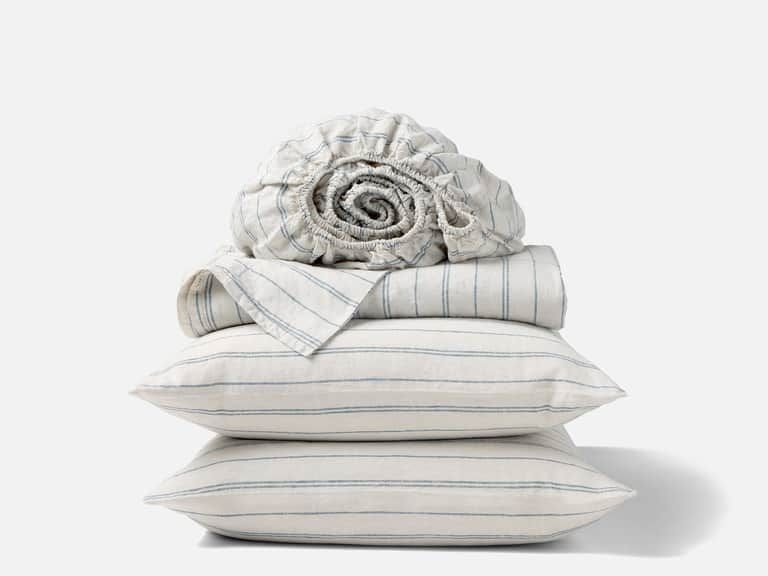
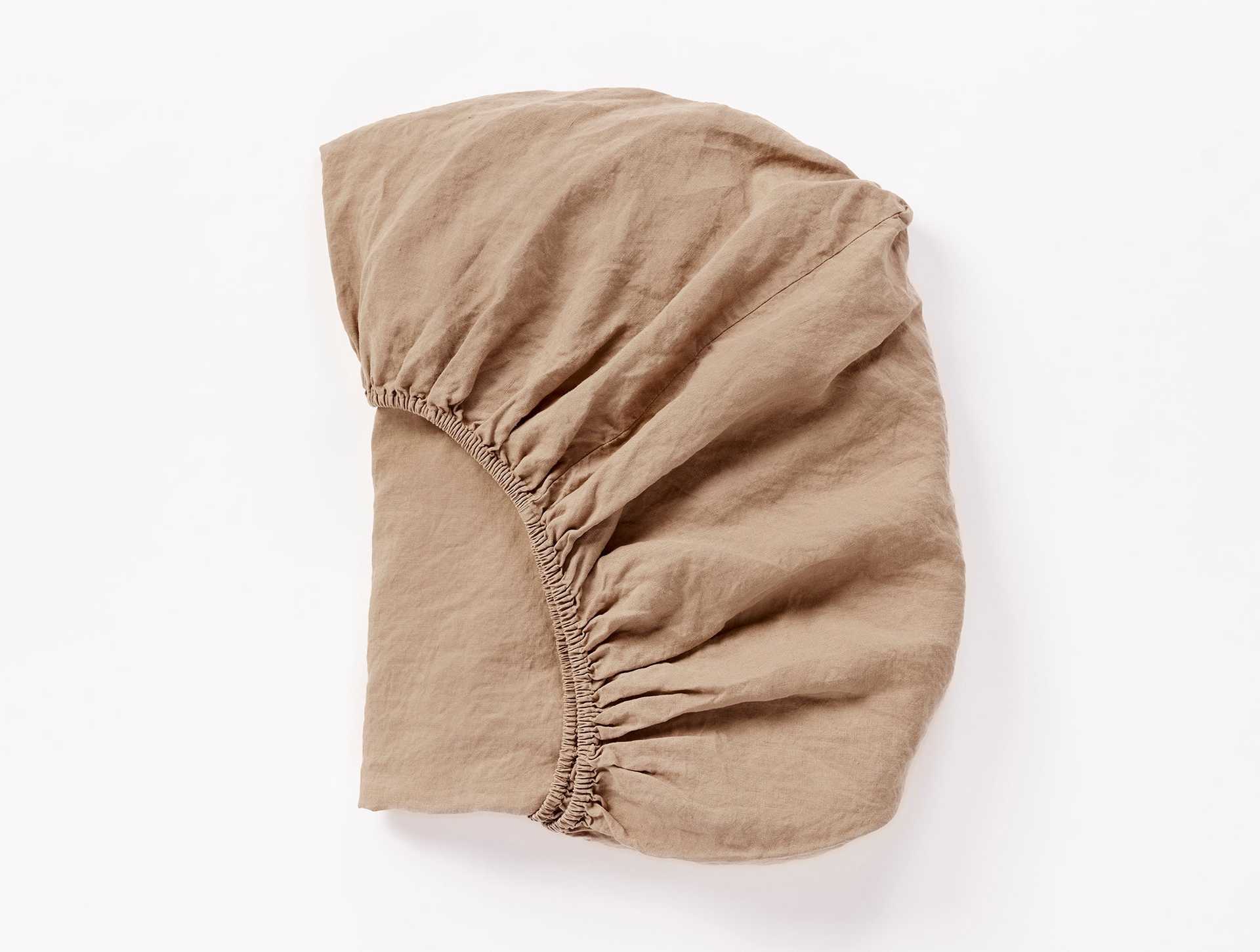
Beautiful fabric is only part of a successful sheet set. Fit, seams, closures, and set contents are the less glamorous details that can make a difference every time the bed is changed. Naturepedic’s sheet set includes a flat sheet, a fitted sheet, and two pillowcases. The fitted sheet is listed with a 15-inch pocket, a specification worth checking against the depth of your mattress and any topper you use.
Mattress depth is easy to overlook until a fitted corner pulls loose in the middle of the night. Before buying, measure the mattress from its base to the top of any topper that will remain in place under the sheet. Compare that measurement with the fitted sheet’s pocket depth, and leave a little room for a secure tuck if your bedding setup is especially thick. A 15-inch pocket is useful information, but the fit still depends on the exact mattress and how the sheet is designed.
Set contents deserve the same careful look. A sheet set may include different pillowcase quantities or sizes depending on the brand and configuration. Naturepedic lists two pillowcases and gives their dimensions as Standard/Queen at 20 by 32 inches and King at 20 by 40 inches. Confirming these details before ordering can prevent a small but frustrating mismatch with the pillows already on your bed.
Finish details such as the fitted sheet’s elastic and the quality of hems and seams also influence how bedding behaves during regular use. Naturepedic describes its set as designed for durability and everyday comfort. For any sheet, careful finishing is worth considering alongside the headline fiber claim: a well-chosen material needs sound construction if it is to become a lasting part of a household’s linen rotation.
A considered approach to care
Good care starts with the instructions attached to the specific product, not with a one-size-fits-all rule for linen. Naturepedic’s guidance for its sheets is to machine-wash warm, tumble-dry on low, use a warm iron if desired, and avoid bleach. Following the manufacturer’s directions is a sensible way to care for the fabric and its finish.
Before the first wash, check the care label and make sure the load is not crowded. Bedding needs room to move so detergent and water can circulate. Washing sheets with similar colors and using an appropriate amount of detergent can help keep the routine simple. Avoiding bleach, as directed, also prevents using a treatment the manufacturer has specifically excluded.
Drying deserves attention too. Low tumble-dry heat is the recommended setting in the product information. Removing bedding promptly when it is dry can limit excess creasing, while a warm iron is optional for anyone who prefers a smoother finish. Linen’s relaxed character does not require an immaculately pressed surface; many people choose it precisely because its texture looks welcoming rather than formal.
In a city apartment, laundry routines may be shaped by shared machines, limited drying space, or a small storage closet. That does not make linen impractical, but it does make planning worthwhile. A rotation of clean sheets can help avoid rushed wash days, and neatly folding a set together keeps the matching pieces easy to find. When space is tight, a breathable storage spot away from direct sunlight is a straightforward option for keeping bedding fresh between changes.
How organic linen fits into a sleep setup
Sheets are the layer that sits closest to the body, but they work as part of a larger system. A linen sheet set can be paired with a duvet cover, blanket, and pillowcases in complementary textures, or with smoother fabrics for contrast. The result need not be a perfectly matched suite. Mixing materials and tones can give a bedroom a more personal, collected feeling while keeping the bed functional.
For a cohesive look, start with the bed’s largest surfaces. Choose the duvet cover and sheets as a foundation, then add pillowcases or a decorative cover in a related shade. If you prefer a quieter room, keep the palette tonal and let the woven texture do the work. If you enjoy more contrast, a deeper accent color can punctuate neutral linen without overwhelming its natural character.
Comfort is just as individual. Some sleepers enjoy linen’s gently textured feel; others prefer the smoother hand of cotton percale or another fabric. If possible, handle a sample or feel comparable linen before committing to a full set. Consider whether you enjoy the look of natural creasing and whether the recommended washing routine fits your habits. A considered purchase is not about finding a universally perfect sheet. It is about choosing one that makes sense for your room, preferences, and day-to-day life.
A practical checklist for comparing organic bedding
When evaluating Naturepedic sheets or another organic linen set, a few focused questions can make product pages easier to navigate:
- What is the fiber? Look for a clear material description, such as linen made from flax, rather than relying on broad marketing language.
- Where does the fiber come from? Check whether the product identifies the growing region and distinguishes it from the places where fabric or finished bedding is made.
- What certification is named? Confirm the specific certification and read its scope rather than treating “organic” as a complete description of every production detail.
- How is the fabric described? Note the gsm, weave or finish information, and any explanation of texture or laundering.
- Will it fit? Compare fitted-sheet pocket depth with your mattress and topper, and verify pillowcase dimensions and set contents.
- Can you care for it as directed? Review water temperature, drying instructions, and any restrictions before making a decision.
- Does the feel suit you? Think about whether you like a textured, relaxed surface and how it compares with the bedding you already enjoy.
The quiet appeal of knowing what you’re sleeping on
Organic linen bedding is often presented as a mood: soft light, natural colors, and an invitingly rumpled bed. That image has its place, but the real story is in the details beneath it. Naturepedic’s organic sheets connect French-grown flax with GOTS certification, a stated fabric weight, a specified fitted-sheet pocket, a defined set of pieces, and clear laundering instructions.
Together, those details help turn an attractive textile into a more understandable choice. They give readers a way to consider where the fiber comes from, how certification fits into the picture, what the fabric might feel like, and whether the construction suits the bed they actually own. The answers are useful whether you are choosing your first linen set or refining a room that already feels like home.
In the end, the best sheets are not simply the ones with the most impressive-sounding description. They are the ones whose material, fit, care, and character make sense in everyday life. For anyone drawn to natural texture and thoughtful sourcing, following the journey from flax to finished bedding is a satisfying place to begin.