Bedding & Design
Coyuchi Organic Flax Pillow Covers: Styling Texture Without Clutter
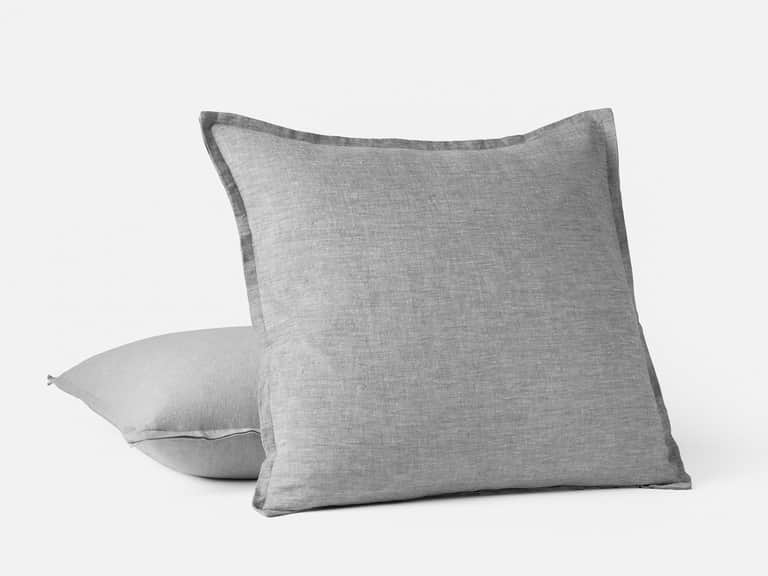
The most inviting rooms don’t always have the most pillows. Sometimes a single, beautifully textured cover is enough to make a bed feel considered or a sofa feel a little more like home. Coyuchi’s Organic Relaxed Linen Decorative Pillow Cover brings that quiet kind of character: a soft, washed surface, a natural fiber story and an easygoing look that plays well with what you already own.
Published October 16, 2026
Decorative pillows have a way of multiplying. One becomes a pair, the pair gathers a patterned lumbar cushion, and soon the bed is less a place to sleep than a small, elaborate arrangement to dismantle each night. Yet the appeal is real: a pillow can introduce a new color, soften a hard-edged room and bring a welcoming sense of finish to a sofa or bedroom.
The trick is to choose accents that contribute something distinct without asking for all the attention. Linen is particularly good at this. Its surface has natural variation and a relaxed drape, so even a quiet color can add dimension. An organic flax pillow cover can make a room feel layered without making it feel crowded—a useful distinction in a city apartment, a compact bedroom or any home where calm is part of the design brief.
Coyuchi’s Organic Relaxed Linen Decorative Pillow Cover is made from 100 percent organic linen, with European-grown fiber and weaving in Portugal. The 22-by-22-inch cover is washed for a relaxed hand and designed for a bed or sofa. The insert is sold separately, which gives you the chance to select the shape and fullness that suit your space. Its understated character is the point: it brings texture into the room, then lets the rest of the room keep talking.
Why linen texture feels like more than decoration
Texture is often what makes a neutral room feel personal. A pale wall, a simple bed and a restrained palette can be beautiful, but without changes in surface they may read as flat. Linen offers a gentle counterpoint. Its woven structure creates a tactile, subtly irregular finish—less glossy than sateen and less sharply crisp than a smooth cotton percale. The result is a surface that catches the eye quietly rather than announcing itself.
That quietness makes linen an especially adaptable choice for pillow styling. A cover can sit beside cotton sheets, a wool throw, a quilt or a patterned duvet without needing to match every material exactly. Instead, it helps connect them. A relaxed linen accent can make a crisp bed feel less formal, or temper the visual busyness of a print with a solid, natural surface.
There is a practical appeal, too. Flax linen is valued for its breathable feel and strength, and it develops a softer character with use and washing. A pillow cover is a small way to try the material before making a larger bedding commitment. It can bring some of linen’s easy, lived-in look to a room without requiring a complete change of sheets, duvet or color scheme.
“Organic” is a meaningful detail when it is tied to a verifiable standard. The Coyuchi cover is described as GOTS certified, a certification associated with organic textile processing and production criteria. If certification matters to you, check the product’s current details and the scope of the claim before purchasing. Material provenance, manufacturing and finishing all contribute to a textile’s story; the label alone does not tell the whole one.
Start with the room, not the pillow pile
Before choosing a decorative pillow cover, take a quick look at what is already in the room. Notice the dominant colors, the largest pattern and the materials that appear more than once. The goal isn’t to create a perfectly matched set. It is to identify the one thing the room could use: a softer note, a touch of contrast or a surface that breaks up a smooth expanse.
For a bed with printed sheets or a patterned duvet, a solid linen cover can act as a visual resting place. It gives the eye a quieter surface between larger designs and helps the pattern feel intentional rather than relentless. If the bedding is already mostly solid, linen can supply interest through its weave and drape instead of introducing another print.
Color works best when it has a relationship to the room, not necessarily an exact match. A warm neutral can echo wood, woven baskets or a natural rug. A cooler shade may connect with a painted wall, a ceramic object or the dimmer tones in a patterned blanket. Repeating a color once or twice elsewhere creates a subtle thread through the space; matching every element precisely can make the result feel more like a showroom than a home.
In a small room, restraint is especially helpful. A single decorative cover placed in front of the sleeping pillows can create a finished look without taking over the bed. On a sofa, one accent pillow may be enough to add softness to a compact seat. Linen’s natural surface does some of the decorative work, so you do not need a large number of cushions to create visual depth.
Scale makes the difference
The 22-by-22-inch size of the Organic Relaxed Linen Decorative Pillow Cover gives it a substantial square profile. On a bed, it can work as a front accent in a simple arrangement or as one of a small pair. On a sofa, it can add a comfortable layer without requiring a full lineup of cushions. The right placement depends on the furniture and on how you use it: a pillow that looks lovely in a photograph should still leave room to sit, stretch out or sleep.
Think about proportion before buying an insert. A well-fitted insert helps a pillow hold its shape and gives the cover a more intentional appearance. Too small, and the corners can look slack; too large, and the seams may strain or the cover may feel overstuffed. A common styling approach is to choose an insert slightly larger than the cover, but the best fit depends on the insert’s fill and loft. Check the manufacturer’s guidance and consider how firm or soft you want the finished pillow to feel.
Also pay attention to the pillow’s role. A decorative cushion for the front of a bed can be fuller and more structured than one intended to support your back while reading. On a sofa, think about the seat depth: an oversized pillow can swallow a narrow seat, while a small accent may disappear against a broad sectional. Good scale is less about rules than about leaving enough room for the furniture—and the people who live with it.
Because the cover and insert are separate, you can reuse an insert you already own if the measurements and shape work. That can make a new cover an easy seasonal refresh. If you are buying an insert, look at its dimensions, fill, care instructions and how it is intended to sit inside the cover, rather than relying on size alone.
Make the layers feel related, not identical
A successful bed is usually a conversation among materials rather than a matching set. Linen sheets, cotton pillowcases, a quilted coverlet and a small decorative pillow can live together comfortably when each layer has a different job. Smooth, crisp cotton can sharpen the softer, more irregular feel of linen. A knitted throw may add a chunkier texture. A patterned duvet can provide the visual feature, while a solid pillow cover gives the eye somewhere to rest.
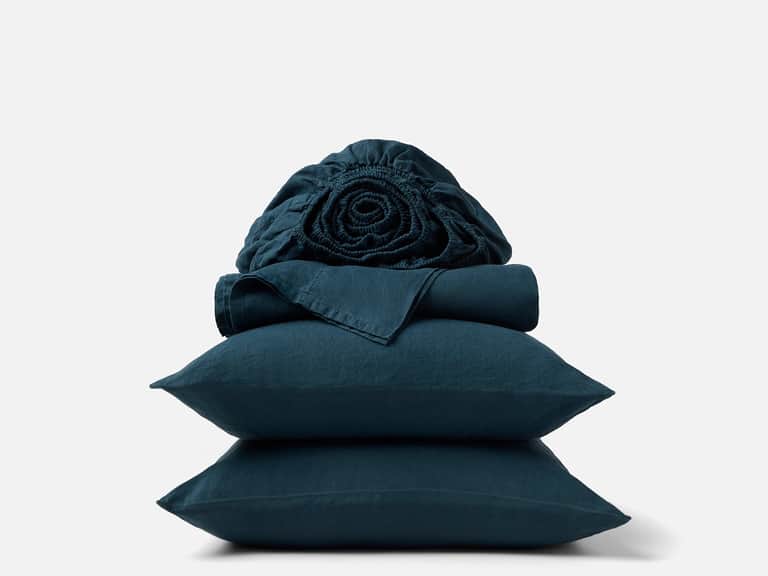
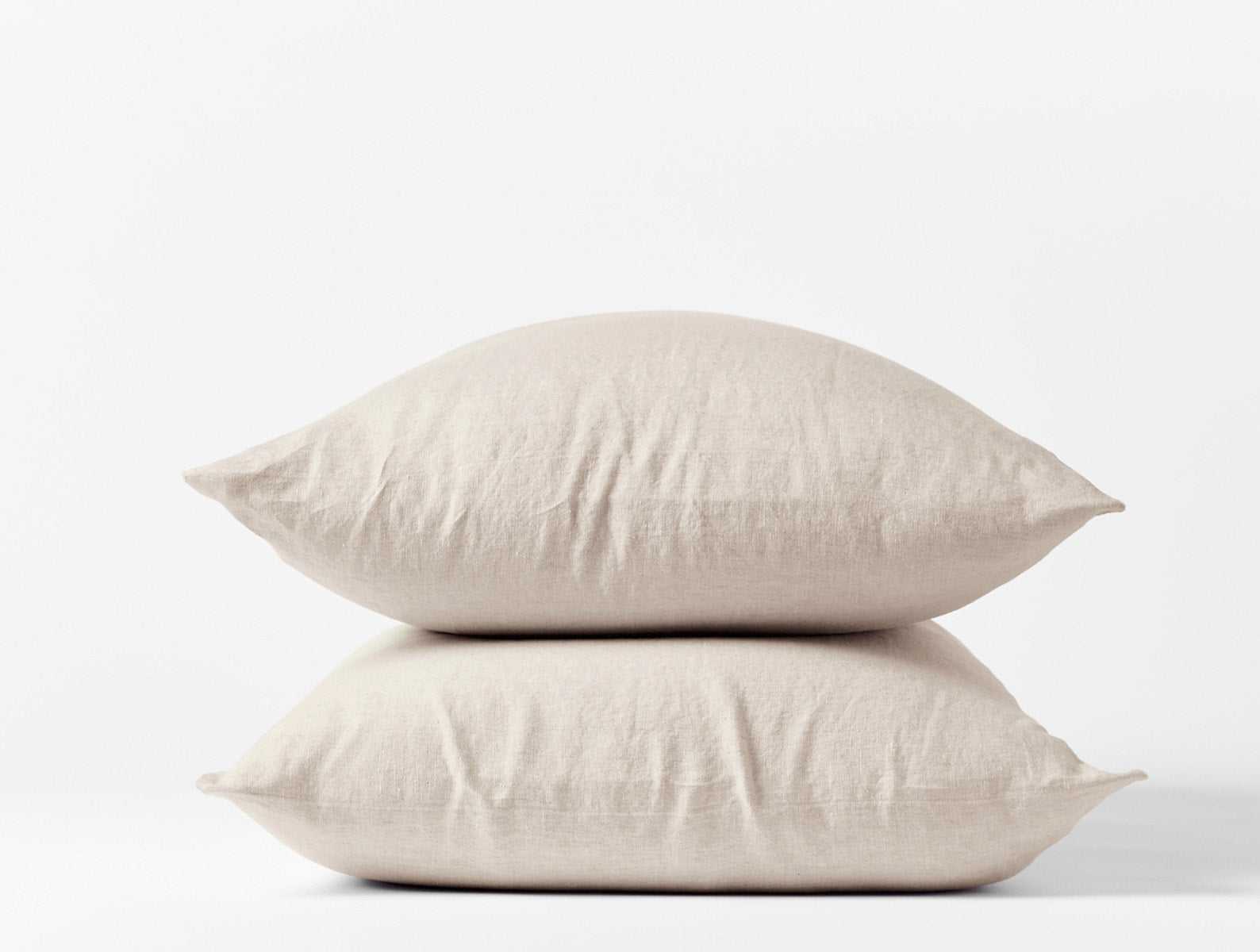
If you prefer a coordinated linen look, the decorative cover can sit alongside organic linen sheets or pillowcases in related tones. Coyuchi’s Organic Relaxed Linen Sheet Set is made from organic French flax woven in Portugal and has a relaxed finish. For a smaller step, Organic Relaxed Linen Pillowcases bring linen to the sleep pillows themselves. Keeping the palette connected while varying the scale and purpose of each piece helps the bed feel cohesive without looking overly uniform.
On a sofa, use the same principle with upholstery and throws. A linen accent can bridge a smooth, tightly woven seat and a nubby blanket. If the upholstery already has visible texture, choose a quieter color; if the sofa is plain and sleek, the linen surface can do a little more. The aim is balance, not a checklist of materials.
Mixing patterns is possible, but it helps to vary their scale. A large floral or stripe can sit beside a small, fine pattern more comfortably than beside another print of similar size and intensity. A solid linen cover can be the simplest partner of all. It keeps the room from feeling as though every surface is competing for the lead role.
A small-space approach to decorative pillows
In New York apartments and other compact homes, every object has to earn its place. Decorative pillows can make a bed look inviting, but they also need somewhere to go at night. Instead of styling for maximum abundance, think about a routine that will still feel appealing at the end of a busy day.
- Choose one clear accent. A single textured cover can finish a bed or sofa without creating a daily pile to move.
- Use a useful shape and size. A cover should suit the bed or seat and leave enough usable space around it.
- Let texture do the work. Linen can add depth without another bold print or a strong color block.
- Plan for storage. If you add more than one pillow, decide where the extras will go when the bed is in use.
- Choose washable pieces when possible. A removable cover is easier to maintain than a decorative pillow that cannot be cleaned at home.
This is not a call for bare rooms. It is a reminder that thoughtful styling can be generous without being crowded. A well-chosen cover can make a small space feel warmer, and an uncluttered arrangement can make the same space feel larger and easier to live in.
Caring for organic flax pillow covers
Care is part of keeping linen beautiful. The product information for Coyuchi’s Organic Relaxed Linen Decorative Pillow Cover recommends machine washing in cold water on a gentle cycle and tumble drying on low. Follow the care label on the cover you receive, since instructions can change and product-specific directions take priority over general advice.
Before washing, remove the insert and close any fastening, if present. Wash the cover with similar colors and avoid packing the machine so tightly that the fabric cannot move freely. A mild detergent is a sensible choice. Bleach and harsh treatments can affect the color and fibers, while fabric softener is often unnecessary on a textile whose appeal is its natural hand.
Low heat helps reduce stress on the fabric. Remove the cover promptly when the cycle is finished and smooth it while slightly damp if you want a tidier finish. Linen naturally wrinkles; those folds are part of its relaxed character. If you prefer a neater look, follow the care label’s ironing guidance and test a less visible area first. Allow the cover to dry fully before putting it back on the insert.
Between washes, regular airing and spot cleaning can help the cover stay fresh. If a spill occurs, blot rather than rub, and treat the mark promptly with a method suited to the fabric. Strong scrubbing can roughen the surface or spread a stain. When in doubt, consult the care instructions or seek professional advice, especially for delicate finishes or stubborn marks.
It is also worth thinking about how the pillow is used. A decorative accent on a bed may need less frequent laundering than a pillow used every day on a sofa. A washable cover makes maintenance easier, but it does not make the insert washable; check the insert’s care guidance separately and make sure it is completely dry before returning it to the cover.
What to look for before you choose
A good pillow cover purchase starts with a few practical questions. Is the fiber content clear? Are the dimensions appropriate for the insert you have? Is the cover sold with an insert or on its own? What does the care label recommend? These details matter as much as the color because they determine whether the cover will suit your room and your routine.
For the Coyuchi cover, the listed dimensions are 22 inches square, the material is 100 percent organic linen, and the insert is sold separately. The brand describes the cover as washed for a relaxed hand, machine washable and made with linen grown in France and woven in Portugal. Those specifics give shoppers a useful basis for comparison, while leaving room to consider the feel, shade and fit in person whenever possible.
Color can vary across screens and lighting conditions. If you are coordinating with sheets or an existing throw, compare the product’s current color information with the pieces already in your room. A little variation between related shades often feels natural; an almost-but-not-quite match can look less intentional when the items sit directly beside one another. Texture can help bridge those differences.
Finally, think about longevity rather than a single styling moment. A versatile neutral or a color already present in your home is likely to work through more than one season. A well-made cover that gets used, washed and enjoyed is more useful than a dramatic accent that only works with one particular arrangement.
The case for one thoughtful accent
There is a particular charm to a room that feels finished but not fussed over. A relaxed flax cover can help create that feeling because its appeal is tactile, not theatrical. It adds a soft edge to a crisp bed, a quieter counterpoint to a patterned duvet or a little warmth to a pared-back sofa. And because its palette and surface are easy to live with, it can adapt as the rest of the room changes.
Start with what the space needs. If it feels too smooth, add texture. If it already has a lot going on, let a neutral linen cover be the pause between patterns. If the bed feels unfinished, consider whether one well-proportioned accent is enough. There is no prize for having the most pillows; the better result is the room that feels good to return to and easy to keep in order.
That is the promise of the Organic Relaxed Linen Decorative Pillow Cover: not a total bedroom makeover, but an approachable way to bring organic flax, a washed surface and a little visual depth into everyday surroundings. With the right insert, a thoughtful placement and gentle care, a single cover can make texture feel like a finishing touch—not clutter.